TL;DR — for images, the per-token price table is the wrong table. We sent one identical 1024×768 chart to five models on 2026-09-20 and read the token counts back from the API: GPT-4o-mini spends 25,522 input tokens on it, GPT-4o spends 786. At list prices that makes the "cheap" model 95% more expensive per image than the flagship it undercuts on paper. Setting detail: "low" — which the default auto does not do — drops GPT-4o-mini to 2,854 tokens, an 8.9× saving with the chart still read correctly, and only then is it cheaper than GPT-4o (by 4.6×). GPT-5 mini sits at 982 tokens for the same image. Measurements, method and what we could not test are in the next section; the published price tables further down still apply to text-heavy multimodal work.
We measured it: the same image, five models, real token counts
Every "cheapest vision API" comparison — including the price table further down this page — ranks models by dollars per million tokens. That ranking is wrong for images, because the same image does not cost the same number of tokens on different models. So we measured it.
Method. One PNG chart we generated ourselves (1024×768, 29.7 KB, five bars with known values), one
identical prompt, called directly against api.openai.com — not through a router, so nothing sits between
the measurement and the provider. Every number below is usage.prompt_tokens as OpenAI returned it.
Tested 2026-09-20; each figure reproduced identically across three consecutive runs.
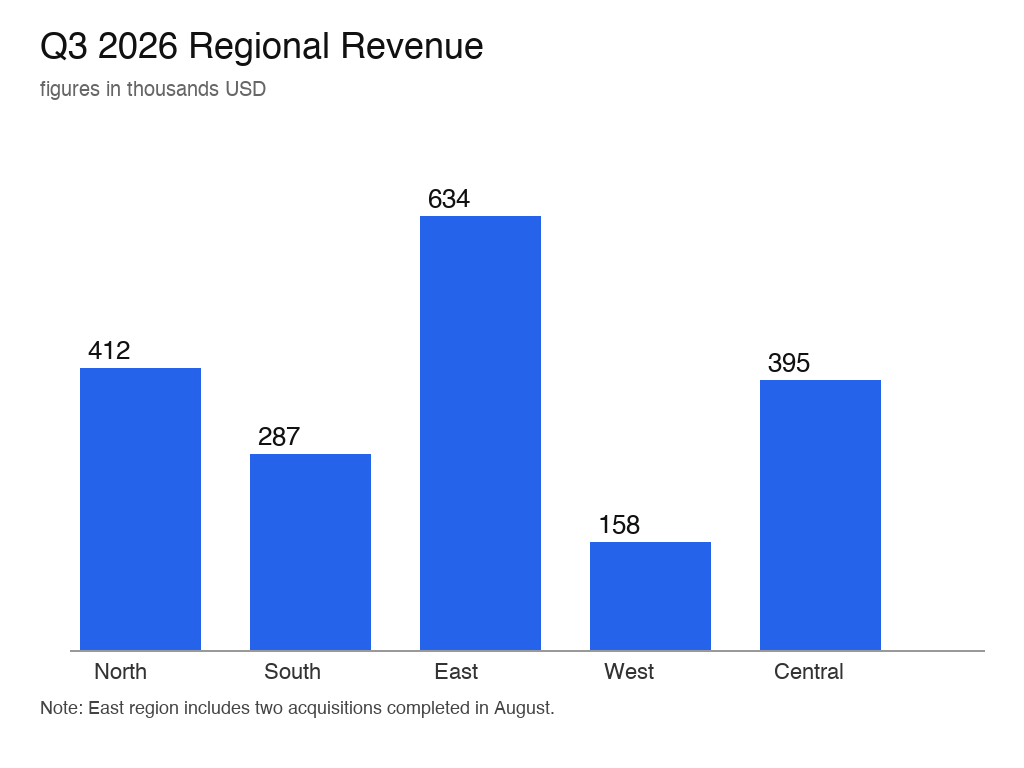
Image tokens for the identical image
| Model | 512×384 | 1024×768 | 2048×1536 | Read all 5 bars correctly? |
|---|---|---|---|---|
| GPT-5 mini | 291 | 982 | 3,747 | ✅ at every size |
| GPT-5.4 mini | 291 | 982 | 3,002 | ✅ at every size |
| GPT-5 nano | 348 | 1,212 | 4,668 | ✅ ✅ ❌ (3/5 at 2048) |
| GPT-4o | 317 | 786 | 827 | ✅ at every size |
| GPT-4o-mini | 8,562 | 25,522 | 25,563 | ✅ at every size |
Two things fall out immediately.
GPT-4o-mini spends 32× more tokens than GPT-4o on the same image. Not 32% — 32 times. Its image tokenizer tiles at a far higher rate, and nothing in the per-token price table hints at it.
GPT-4o and GPT-4o-mini stop scaling past ~1024px. Sending the 2048×1536 version cost them the same as the 1024×768 version and taught them nothing new — the request just moved four times the bytes for free. The GPT-5 family does scale with resolution, roughly 4× the tokens for 4× the pixels.
What that does to cost per image
Using the input prices we track (as of 2026-09-14: GPT-4o $2.50/1M, GPT-4o-mini $0.15/1M), for one 1024×768 chart:
| Model | Image tokens | $/1M input | Cost per image |
|---|---|---|---|
| GPT-4o-mini, default settings | 25,522 | $0.15 | $0.003828 |
| GPT-4o | 786 | $2.50 | $0.001965 |
GPT-4o-mini with detail: "low" |
2,854 | $0.15 | $0.000428 |
The "cheap" model costs 95% more per image than the flagship it is supposed to undercut. GPT-4o-mini is priced at one-seventeenth of GPT-4o per token and still loses, because it burns 32× the tokens. If your workload is mostly images, the per-token price table actively misleads you.
The one parameter that flips the result
detail on the image block. We measured all three values on GPT-4o-mini with the same chart:
detail |
Image tokens | Answer still correct? |
|---|---|---|
"low" |
2,854 | ✅ |
"high" |
25,522 | ✅ |
"auto" (the default) |
25,522 | ✅ |
auto resolves to high. Most code never sets detail, so most GPT-4o-mini vision traffic is paying
the 25,522-token rate. Setting "low" cut the bill 8.9× on this task and still read every bar
correctly — it only stops being safe when you need fine detail such as dense small text or precise OCR.
With detail: "low", GPT-4o-mini becomes 4.6× cheaper per image than GPT-4o — the ordering everyone
expects, but only after setting a flag the pricing page never mentions.
What we did not test
Honesty about scope, since the tables below cover more than this: these measurements are the OpenAI family
only, because those were the credentials we could verify on the test date. We have not measured Gemini,
Claude, Qwen-VL or GLM image tokenization first-hand, so treat their rows in the price table below as
published per-token prices, not measured per-image costs — the same caveat that just cost GPT-4o-mini
its top spot. We also could not measure through our own router: on the plan we tested, explicitly requesting
a model is rewritten to automatic routing, which makes it unusable as a measuring instrument (a request for
gpt-5-mini came back served by gemini-3-flash).
Reproduce it: generate any chart PNG, send it with an identical prompt to each model against the
provider's own endpoint, and read usage.prompt_tokens. The counts are deterministic — ours repeated
exactly across three runs.
Why Vision and Multimodal API Costs Matter More Than Ever
Multimodal AI — models that understand images, screenshots, charts, and video alongside text — has become a core part of production workflows. From UI-to-code generation and document extraction to visual QA and medical image analysis, developers are sending millions of image tokens through LLM APIs every day.
The problem: image inputs are expensive. A single 1024x1024 image consumes 500-2,000+ tokens depending on the provider's encoding. At premium model rates, processing 1,000 images per day can cost $50-200/day — over $6,000/month. Choosing the wrong multimodal model for simple image tasks is the fastest way to blow your AI budget.
This guide compares every major vision-capable LLM API available in 2026, with real pricing data from provider rate cards, so you can find the cheapest option for your specific use case.
Complete Vision & Multimodal LLM API Pricing Table (2026)
Here's every vision-capable model available through standard chat completion APIs, ranked by output token cost:
These are published per-token prices, not measured per-image costs — see the measurement section above for why the two diverge. For the current numbers with per-provider as-of dates, the maintained source is our LLM API pricing tracker; where this table and the tracker disagree, the tracker is newer.
| Model | Input $/1M | Output $/1M | Vision | Video | Provider |
|---|---|---|---|---|---|
| GPT-5 Mini | $0.25 | $2.00 | Yes | No | OpenAI |
| Gemini 2.5 Flash | $0.30 | $2.50 | Yes | Yes | |
| Gemini 3 Flash | $0.50 | $3.00 | Yes | Yes | |
| Claude Haiku 4.5 | $1.00 | $5.00 | Yes | No | Anthropic |
| Gemini 2.5 Pro | $1.25 | $10.00 | Yes | Yes | |
| GPT-5.2 (legacy) | $1.75 | $14.00 | Yes | No | OpenAI |
| GPT-5.4 | $2.50 | $15.00 | Yes | No | OpenAI |
| Claude Sonnet 4.6 | $3.00 | $15.00 | Yes | No | Anthropic |
| Gemini 3 Pro | $3.75 | $15.00 | Yes | Yes | |
| Claude Opus 4.5 | $5.00 | $25.00 | Yes | No | Anthropic |
| GPT-5.5 | $5.00 | $30.00 | Yes | No | OpenAI |
| Claude Opus 4.7 | $15.00 | $75.00 | Yes | No | Anthropic |
Key Takeaway: 37x Price Spread
On output tokens alone, the cheapest vision model (GPT-5 Mini at $2/M output) costs 37.5x less than the most expensive (Claude Opus 4.7 at $75/M output). For a workload processing 5 million output tokens per month, that's $10 vs. $375 — a $365/month difference on output alone.
What About Non-Vision Models?
Several popular models — including DeepSeek V4 Flash ($0.14/$0.28), DeepSeek V4 Pro, Kimi K2.6, and the entire Qwen family — do not support vision inputs. If your workflow requires image understanding, these text-only models are not an option, regardless of their attractive pricing. This makes smart routing between vision-capable models even more critical.
Cheapest Multimodal API by Use Case
Not every vision task needs the same model. Here's a breakdown of the cheapest API that delivers acceptable results for each category:
Simple Image Classification and OCR
Cheapest per token: GPT-5 Mini — $0.25/$2.00 per million tokens. (Cheapest per image is a different question — see the measurements above.)
For tasks like reading text from screenshots, classifying product images, or extracting data from receipts, GPT-5 Mini handles them reliably at a fraction of premium model costs. Its vision capabilities are sufficient for structured extraction tasks where the visual content is clear and unambiguous.
Chart and Diagram Understanding
Cheapest: Gemini 2.5 Flash — $0.30/$2.50 per million tokens
Charts, graphs, and technical diagrams require slightly more spatial reasoning than basic OCR. Gemini 2.5 Flash excels here due to Google's strong training on document understanding. It accurately interprets bar charts, line graphs, and flowcharts at near-budget pricing.
UI Screenshot to Code
Best value: Gemini 3 Flash — $0.50/$3.00 per million tokens
Converting UI screenshots to HTML/CSS/React code demands both visual understanding and code generation ability. Gemini 3 Flash offers the best quality-to-cost ratio for this task, with coding capability scores of 4/5 in our benchmarks. For production-quality UI reproduction, step up to GPT-5.4 ($2.50/$15) or Claude Sonnet 4.6 ($3/$15).
Complex Visual Reasoning and Analysis
Best quality: Gemini 3 Pro or Claude Opus 4.7
Medical image analysis, complex document comparison, multi-image reasoning, and architectural diagram analysis require top-tier visual understanding. Gemini 3 Pro ($3.75/$15) and Claude Opus 4.7 ($15/$75) lead here, with Gemini offering better value and Claude providing superior nuanced reasoning.
Video Understanding
Only option: Gemini models (2.5 Flash, 2.5 Pro, 3 Flash, 3 Pro)
As of mid-2026, Google's Gemini is the only provider offering video input through standard chat completion APIs. Anthropic and OpenAI do not support video in their chat endpoints. If your workflow requires video understanding, Gemini 2.5 Flash ($0.30/$2.50) is the cheapest entry point.
How Smart Routing Slashes Multimodal API Costs
The real savings in multimodal AI come not from choosing one cheap model, but from intelligently routing each request to the cheapest model that can handle it. Here's why:
The Routing Cost Advantage
In a typical multimodal workload, task complexity follows a predictable distribution:
- 60-70% simple tasks (OCR, classification, basic extraction) — GPT-5 Mini handles these at $2/M output
- 20-25% medium tasks (chart reading, UI analysis, document comparison) — Gemini 3 Flash at $3/M
- 5-15% complex tasks (visual reasoning, multi-image analysis) — Gemini 3 Pro or Claude Sonnet at $15/M
Using a single premium model for everything means paying $15-75/M for tasks that a $2/M model handles perfectly. With smart routing, your blended cost drops to approximately $3-5/M output — a 60-90% reduction compared to using Claude Sonnet 4.6 or GPT-5.4 for all requests.
How ClawRouters Routes Multimodal Requests
ClawRouters automatically detects image content in incoming requests and routes to vision-capable models only. The routing algorithm:
- Detects multimodal content — identifies image/video inputs in the request
- Classifies task complexity — determines whether the visual task is simple (OCR, classification) or complex (reasoning, analysis)
- Filters to vision-capable models — excludes text-only models like DeepSeek and Kimi from the candidate pool
- Selects the cheapest capable model — matches the task to the lowest-cost model with sufficient capability scores
This happens in under 10ms with zero configuration. Just send your requests to the ClawRouters API with model="auto" and the router handles the rest. See the setup guide for integration instructions.
Cost Comparison: Routed vs. Single-Model Multimodal Workloads
Let's compare monthly costs for a real-world multimodal workload of 10 million output tokens (approximately 5,000 image analysis requests per day at ~2K output tokens each):
| Strategy | Monthly Cost | Savings vs. Claude Sonnet |
|---|---|---|
| Claude Opus 4.7 (all requests) | $750 | -400% (costs more) |
| Claude Sonnet 4.6 (all requests) | $150 | Baseline |
| GPT-5.4 (all requests) | $150 | 0% |
| Gemini 3 Pro (all requests) | $150 | 0% |
| Gemini 3 Flash (all requests) | $30 | 80% |
| GPT-5 Mini (all requests) | $20 | 87% |
| ClawRouters smart routing | $30-50 | 67-80% |
Smart routing through ClawRouters delivers the quality of premium models on complex tasks while keeping blended costs close to budget-model pricing. You get Claude Opus-quality reasoning when you need it and GPT-5 Mini speed on simple tasks — automatically.
For more details on cost optimization strategies, see our complete guide to reducing LLM API costs and the AI API cost calculator.
Getting Started with Cheap Multimodal API Routing
The fastest path to the cheapest multimodal API setup:
- Sign up for ClawRouters — free, no credit card required
- Add your provider API keys (OpenAI, Anthropic, Google) in the dashboard
- Point your application to
https://www.clawrouters.com/api/v1— see the setup guide - Send image requests with
model="auto"— the router selects the cheapest vision-capable model automatically
ClawRouters supports all standard multimodal input formats (base64 images, image URLs) across all providers. The OpenAI-compatible API means you change one line of code — your base_url — and all existing image processing code works immediately.
For a deeper comparison of routing platforms, see our best LLM routers in 2026 guide or the ClawRouters vs OpenRouter vs LiteLLM comparison.
FAQ
Comparing specific models rather than categories? The model-vs-model comparison index has the head-to-heads, and every rate comes from the LLM pricing tracker with a per-provider verification date.